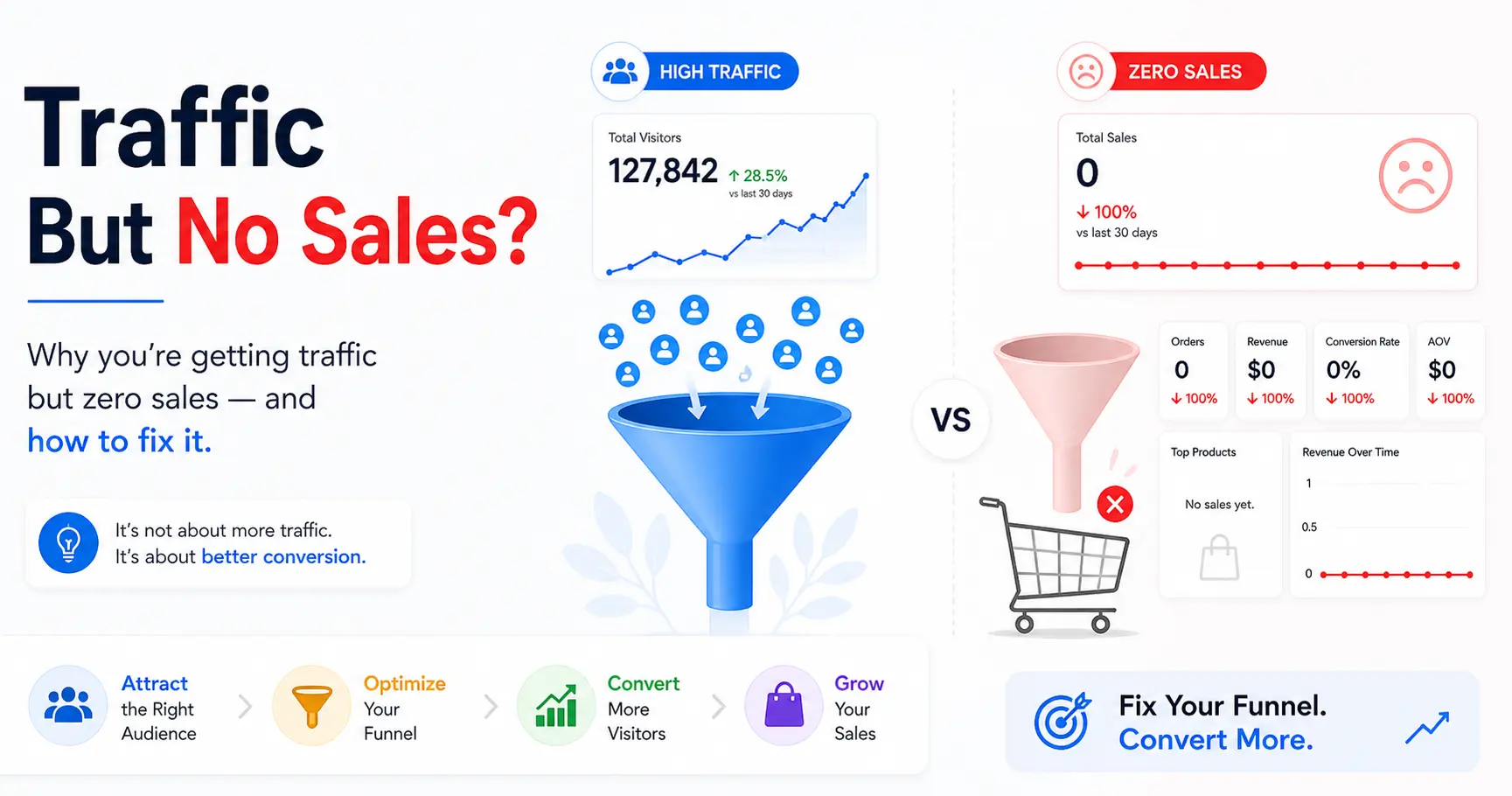
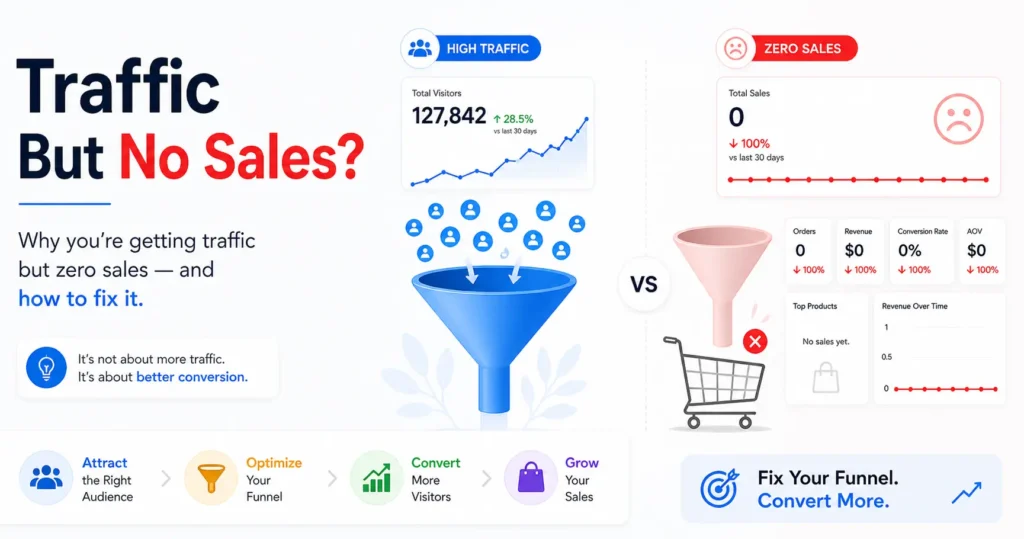
Your Google Analytics says 4,000 visitors last month. Your inbox says zero new clients. You’ve checked the numbers twice, refreshed the dashboard, maybe even blamed the algorithm. But the traffic isn’t the problem. The traffic was never the problem.
- Name the pain precisely: Businesses that invested in SEO or ads, got the visits, and still can’t understand why nobody buys.
- Reframe the problem early: Traffic is a vanity metric without intent alignment. Volume is not the goal the right visitors are.
- Promise: By the end, the reader has 5 specific diagnoses for their own site and a clear first action to take.
Why high traffic with low sales is actually a targeting problem
- Explain search intent: Informational vs navigational vs transactional intent most sites attract the wrong type. Someone searching “what is SEO” is not the same buyer as “SEO agency for my business.”
- The keyword trap: Ranking for high-volume keywords feels like a win but if those keywords attract researchers, not buyers, your conversion rate stays zero. Example: A law firm ranking for “what is personal injury law” vs “personal injury lawyer Lahore” very different buyer readiness.
- Pivot line: “More traffic is not the fix. Smarter traffic is. Here’s how to tell which category your site’s visitors fall into and what to do about each.”
5 reasons your traffic isn't converting (and the fix for each)
1. You're attracting the wrong search intent
You rank for awareness-stage keywords but your site only serves decision-stage visitors. The gap between what they’re looking for and what you offer kills trust instantly.
Fix → Audit your top 10 traffic-driving keywords. Label each as informational or transactional. Add conversion-intent pages for the transactional ones.
2. Your landing page doesn't match what the ad or search result promised
3. Your CTA is vague, buried, or asking too much too soon
4. Your site doesn't build enough trust before asking for the sale
5. You're not retargeting the visitors who leave
What intent-based SEO actually looks like in practice
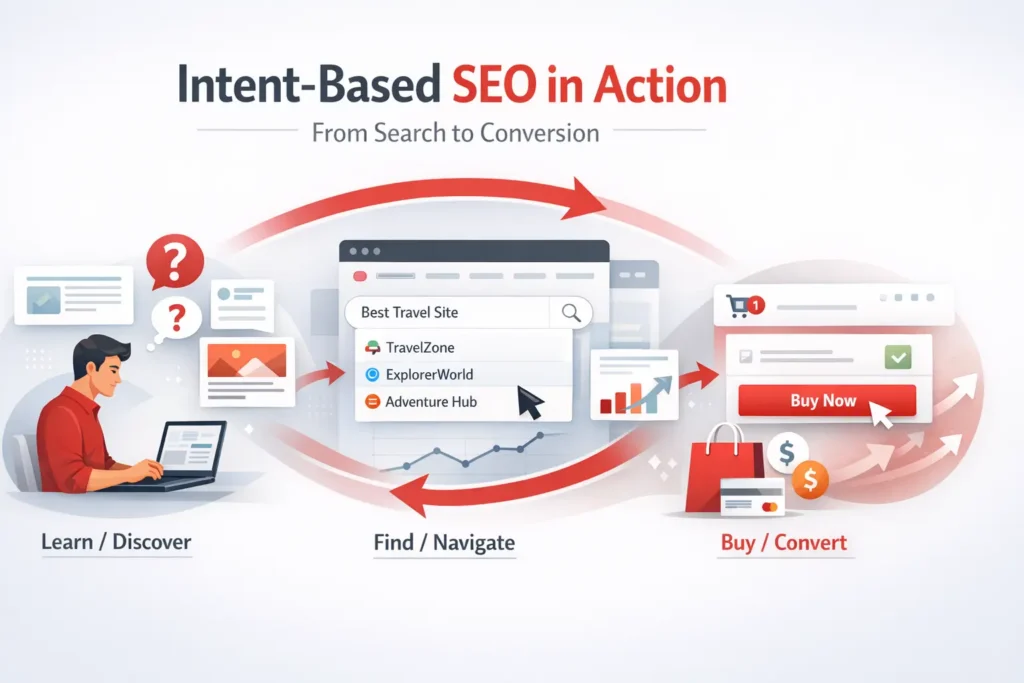
- Explain the methodology briefly: Intent-based SEO maps every piece of content to a stage of the buyer journey awareness, consideration, decision. Most agencies only do awareness.
- The Dev Point’s differentiator: “We don’t just drive traffic we drive the right customers.” Use this section to show how AI-assisted keyword targeting identifies buyer-intent keywords that competitors ignore.Use a real or anonymised example: Client in [industry] was getting 6,000/month visits, 2 leads. After intent realignment — same traffic, 34 leads.
- Simple 3-step framework readers can act on: (1) Map current keywords by intent. (2) Identify which pages serve decision-stage visitors. (3) Add conversion elements only to those pages.
Quick self-audit 5 questions to diagnose your own site right now
- Do your top 5 traffic keywords match the language your paying customers actually use when they’re ready to buy?
- Does your homepage or landing page have a single, specific CTA above the fold — or multiple competing options?
- Does your site show proof of results (numbers, client names, case studies) within the first scroll?
- Do you have a retargeting pixel installed and a live ad targeting past visitors?
- Is your page load time under 3 seconds on mobile? (A 1-second delay reduces conversions by ~7%.)
Conclusion
The traffic wasn’t the problem. It was never the problem. Now you know what is. Getting traffic at all means your content is working — the gap is in conversion strategy, which is fixable. If you answered ‘no’ to 2 or more questions above, a 30-minute SEO audit will show you exactly where your conversions are leaking.”