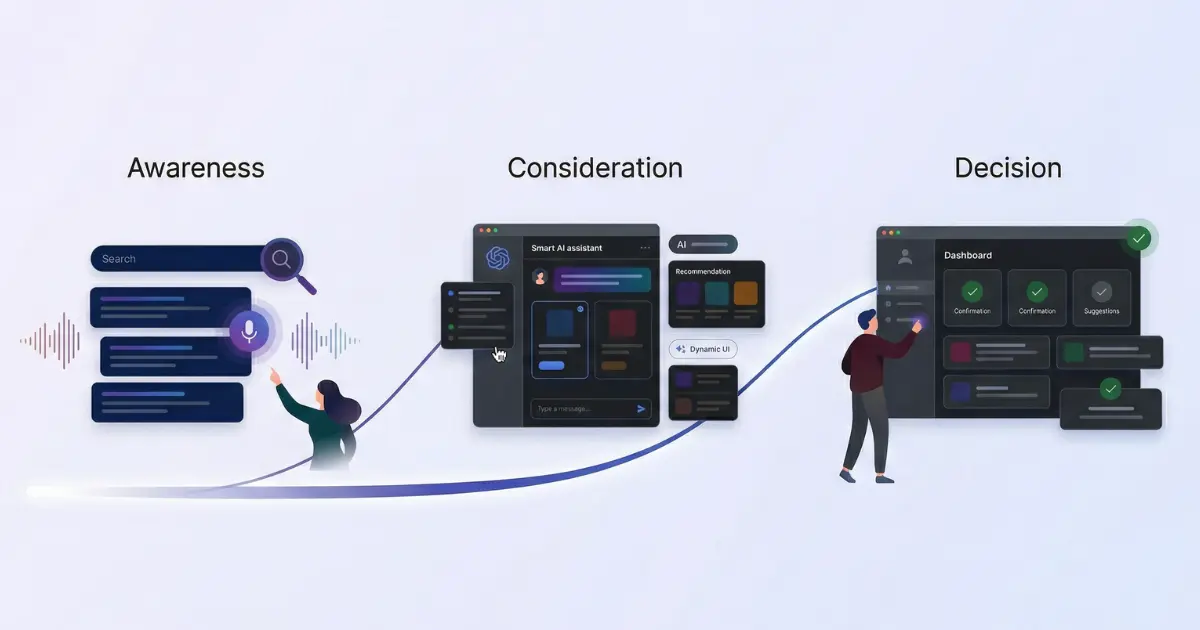
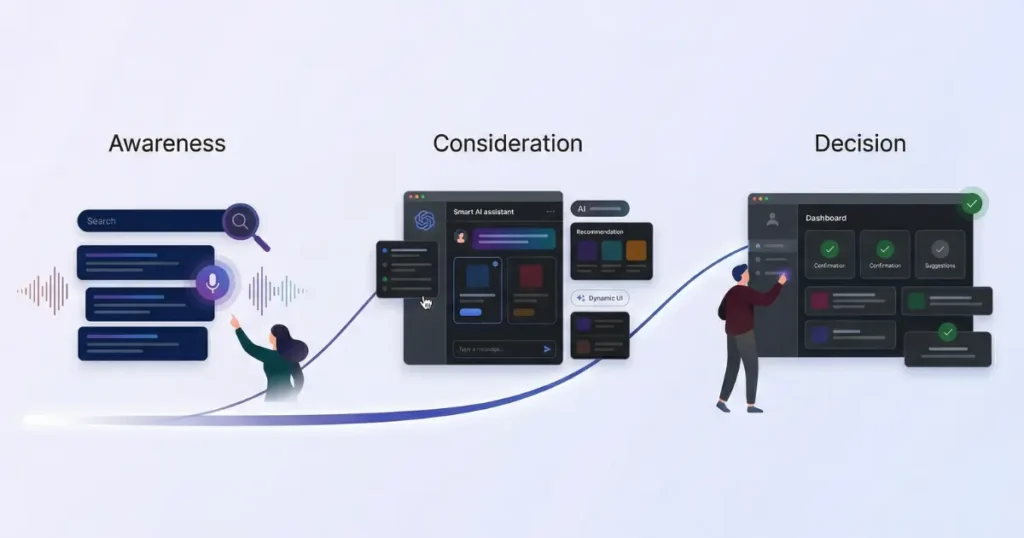
Navigating the 2026 AI Search Reality
This works best for B2B brands with complex sales cycles. It won’t help if your business relies entirely on impulse consumer purchases. This guide covers strategic funnel integration. It does NOT address technical site speed auditing. SEO Marketing Supports is defined as the strategic alignment of search optimization tactics with every phase of the customer lifecycle today. It transforms search visibility from a top-of-funnel vanity metric into a predictable revenue driver. Stop tracking fluff.
Look if you’re spending thousands on SEO, here’s what actually works. Users who’ve tried traditional keyword stuffing often report terrible conversion rates because they completely ignore the actual buyer’s journey and user intent. Or maybe I should say it this way: they optimize for algorithms, not decisions. Change your focus.
Read More → How Your Website UI/UX Directly Impact Your SEO Ranking
How SEO marketing supports business goals is evolving rapidly due to generative AI capabilities. According to the HubSpot State of Marketing Report (2024), 69% of marketers actively invest in SEO to support customer acquisition. It requires answering complex queries directly to capture high intent buyers early on the results page.
I have seen conflicting data. Some sources say AI search will kill traditional organic traffic, while others say it won’t change B2B buying behavior. But deep dive educational content will still drive the final conversion. My reading is the middle path.
Zero click searches will dominate the early phases.
Optimizing Top of the Funnel for AI Summaries
How AI SEO marketing supports the awareness stage requires shifting focus from basic keywords to conversational intent. The strategy now demands structured data, concise definitions and authoritative expert citations to secure placement within Google generative search experiences, capturing buyers before they ever click a link.
Most people assume optimizing for AI means stuffing pages with generic background information the data says otherwise. Your target audience is looking for highly specific answers. Give them facts.
To capture this audience, follow these steps:
- Identify long tail queries buyers ask.
- Write factual answers under sixty words.
- Cite verifiable primary source data.
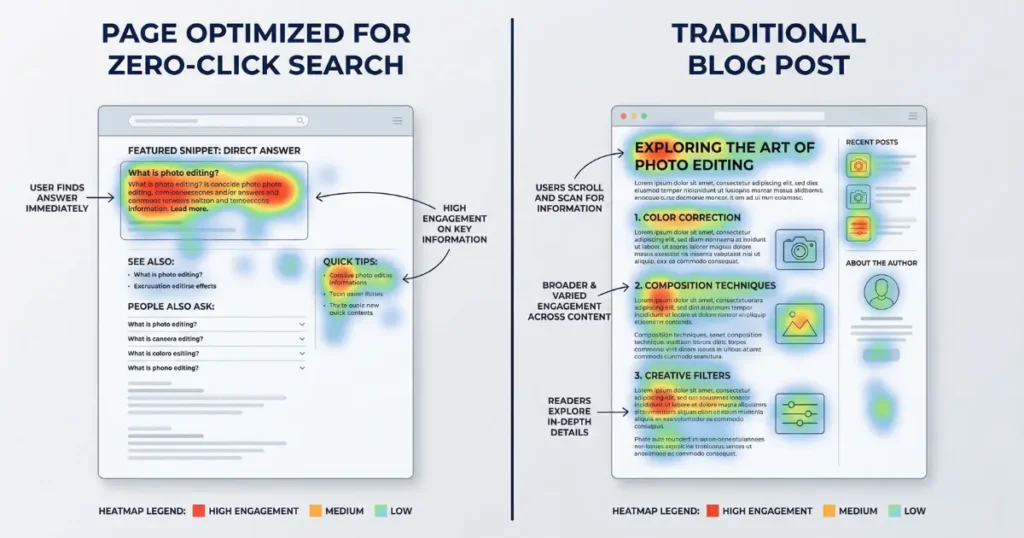
The Consideration Stage and Zero-Click Value
How SEO supports business goals at the consideration phase relies heavily on providing immediate, scannable value. According to a recent Google Search Central → developer documentation, structured product comparisons directly influence buying decisions right on the search engine results page by displaying crucial pricing data.
Quick Comparison
| Option | Best For | Key Benefit | Limitation |
|---|---|---|---|
| Traditional Organic Links | Deep research | High conversion rate | Requires clicks |
| AI Overview Snippets | Quick answers | Immediate brand visibility | Zero-click traffic |
| Rich Snippet Comparisons | Consideration stage | Drives qualified buyers | Needs strict schema |
Competitors often focus far too heavily on traditional funnel definitions, choosing to write endless beginner guides instead of addressing actual buyer needs. What most guides skip is the consideration phase. They fail entirely.
Users compare options directly in search results without ever clicking a blue link. They scan the page very quickly to find relevant data. They judge.
Ahrefs vs Google Search Console: Ahrefs is better suited for competitor gap analysis because of its massive third-party database. Google Search Console works better when you need exact, first-party impression data. The key difference is the data source and specific use case.
AI search impact → seo funnel optimization
Proving the Revenue Connection at the Bottom of the Funnel
Some experts argue that SEO is strictly an awareness channel. That’s valid for low-ticket consumer goods. But if you’re dealing with B2B SaaS or enterprise services, search data is your absolute strongest sales enablement tool for closing deals.
Here’s the thing: you must connect organic traffic metrics directly into HubSpot CRM to map specific landing pages to closed-won deals. It provides the exact financial data needed to justify your marketing budget. This proves monetary value.
Quick Answers for Your SEO Strategy
What's the best way to track SEO ROI?
Connect your web analytics to your CRM to track which organic landing pages generate actual sales pipeline, not just traffic.
How do I optimize for AI Overviews?
Provide concise, factual answers to conversational queries, use structured data, and cite credible primary sources.
Should I still target high volume keywords?
Yes, but only if the search intent aligns with your business goals. Avoid vanity metrics that don’t convert.
Why does my organic traffic look lower this year?
Zero click searches are rising. Users get their answers directly on the search results page without clicking through to your site.
When should I focus on bottom of funnel SEO?
Prioritize bottom of funnel content immediately if you need to show quick revenue impact and support active sales conversations.